Kitchens above lakes and coasts · Sounding 02
Sounding 02 · Galley

A Kitchen That Must Not Sway

Entry 01 · Weight

The heaviest room on board

A professional kitchen is the densest load on any restaurant platform. Combination ovens, blast chillers, a walk-in cold room, dish machines with their tanks of hot water — together they can outweigh the entire dining room at full capacity. On land, nobody notices. On water, that mass decides the trim of the deck.

Designers therefore place the kitchen close to the centreline and directly above the strongest buoyancy, then balance it with fixed ballast on the opposite side. Changing weights are logged: a delivery of crates or a filled grease tank shifts the deck slightly, so cold rooms are usually sited where their varying contents matter least. The best galleys we have visited keep a weight sheet pinned beside the pass, just as a ship would.
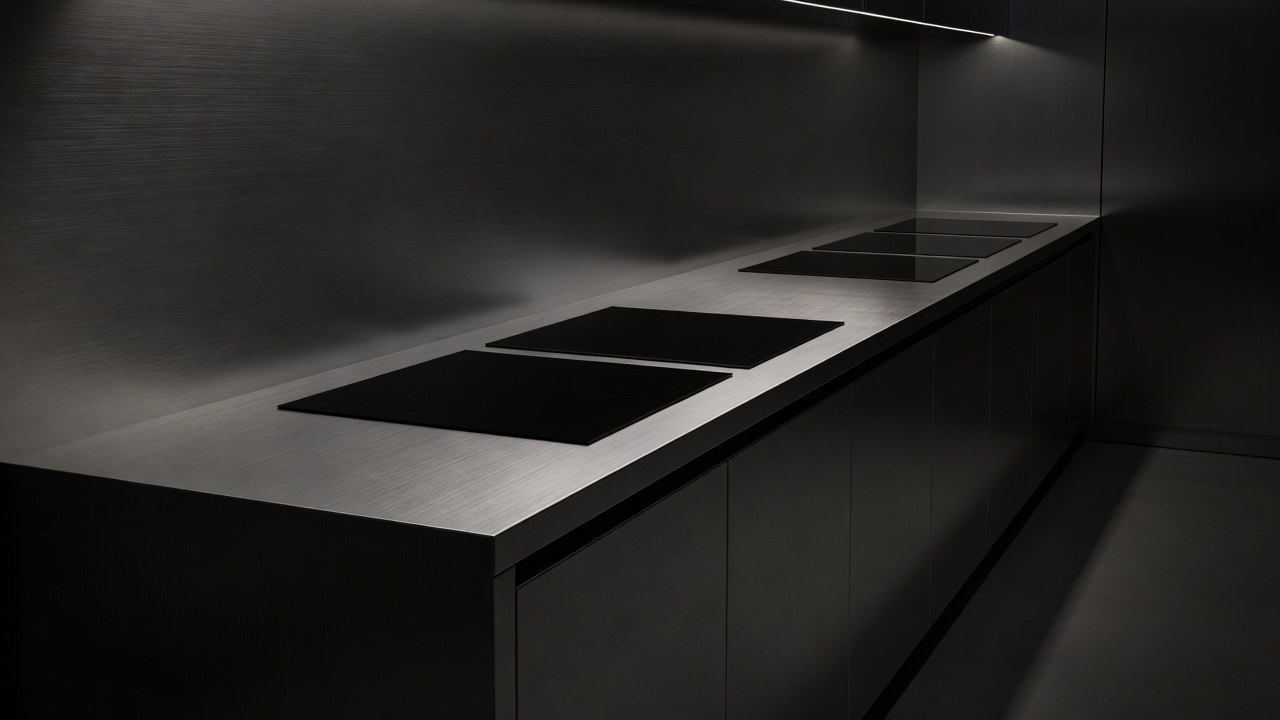
Induction line, no open flame, rails on every edge.
Entry 02 · Heat

Why induction rules afloat

Liquefied petroleum gas is heavier than air. On a hull with enclosed compartments, a leak sinks and pools where nobody can smell it — the reason many marine authorities restrict or ban LPG below deck. Floating restaurants increasingly cook on induction and electric combination ovens instead. Induction also keeps the galley cooler, reduces the load on extraction and puts heat only where the pan sits, which matters when a cook cannot step back from a flame as freely as on land.

Where chefs insist on fire — a charcoal grill for whole fish, a wood oven for bread — it is usually placed on the open deck, inside a steel enclosure with its own suppression and a clear route to the water.

Entry 03 · Galley checklist

Built for motion

Edges

Fiddles and rails

Raised lips on counters and shelves, borrowed from yacht galleys, stop pans and plates from sliding during a wake.

Steel

Grade 316, not 304

Molybdenum-bearing stainless resists the chloride corrosion that pits ordinary kitchen steel in salt or brackish air.

Floor

Non-slip, sealed, drained

Resin floors with coved edges and continuous drainage to holding tanks — nothing reaches the water.

Fixings

Everything bolted

Ovens, racks and refrigeration fastened to the structure so nothing walks when the deck flexes.

Entry 04 · Air and fire

Extraction and suppression

Kitchen extraction on a floating structure must exhaust grease-laden air without dropping it onto the deck or the water. Ducts are kept short, filtered at the canopy and discharged high, away from guest terraces and downwind of the prevailing breeze where possible. Above fryers and grills, wet-chemical suppression systems release an agent that cools burning oil and forms a soap-like crust over it. Portable class F extinguishers and fire blankets stay within reach of every station.

Evacuation planning is stricter than on land because the only exit may be a single gangway. Larger platforms provide a second escape route — a boarding point for rescue boats — and keep lifebuoys and throwing lines on every elevation.

Entry 05 · Hygiene

The rules do not float away

In the European Union, a floating restaurant is a food business like any other, bound by Regulation (EC) No 852/2004 on the hygiene of foodstuffs and its requirement for procedures based on HACCP principles. Many operators also certify against ISO 22000. What changes on water is the plumbing: potable supply must be protected from backflow, grease traps must be emptied ashore, and every litre of waste water is pumped to land rather than released. Inspectors check the holding tanks as carefully as the fridges.

Cold chain is harder too. Deliveries arrive by gangway trolley or tender boat, so the time between van and cold room must be measured and recorded — the timeline on our sourcing page shows how one kitchen keeps it short.

Entry 06 · Service

What the guest notices

If the galley is right, the guest notices nothing. Glasses are slightly heavier-based, sauces are plated a little thicker, tall garnishes are fewer. Waiters walk the centre of the deck and carry with two hands when a boat passes. The calm on the plate is engineered several decks below.

Read the Log